Meet the Team
Yuwei Cao 
The leader of the project is Yuwei Cao. She’s a postdoctoral researcher in the Department of Forestry at the University of British Columbia studying forest tree species prediction using deep learning. She’s excited to extend her skills to empower women in Forestry.
Brianne Boufford 
Brianne graduated from UBC in 2022 with a BSc in Physics. Brianne experimented with a few different areas of data science before learning about remote sensing by joining the IRSS as a work learn student. After graduating, she spent a year working as a remote sensing analyst before returning to do her MSc. Brianne’s project looks to use remote sensing data and statistical methods to improve the representation of vegetation dynamics during hydrological recovery within Raven, a process-based hydrological model.
Harry Seely 
Harry completed his undergraduate degree in Biology at the university of Guelph specializing in Wildlife conservation. After developing a passion for GIS, cartography, and remote sensing, he decided to further pursue these skills as a career. Identifying the parallels between Wildlife management and forestry, Harry applied to the Master of Geomatics for Environmental Management (MGEM) program at UBC. During his time in MGEM, Harry realized that coding in R can be fun (except when it’s infuriating). He focused on a research project that used area-based LiDAR metrics to map snags in the Interior Douglas-Fir Zone of British Columbia. This research led him to pursue a PhD in the IRSS lab which applies deep learning algorithms to estimate tree biomass and carbon using LiDAR and Digital Aerial Photogrammetry. Overall, Harry’s research priority is ensuring effective science communication to improve environmental decision making in Canada.
Jing Jiang 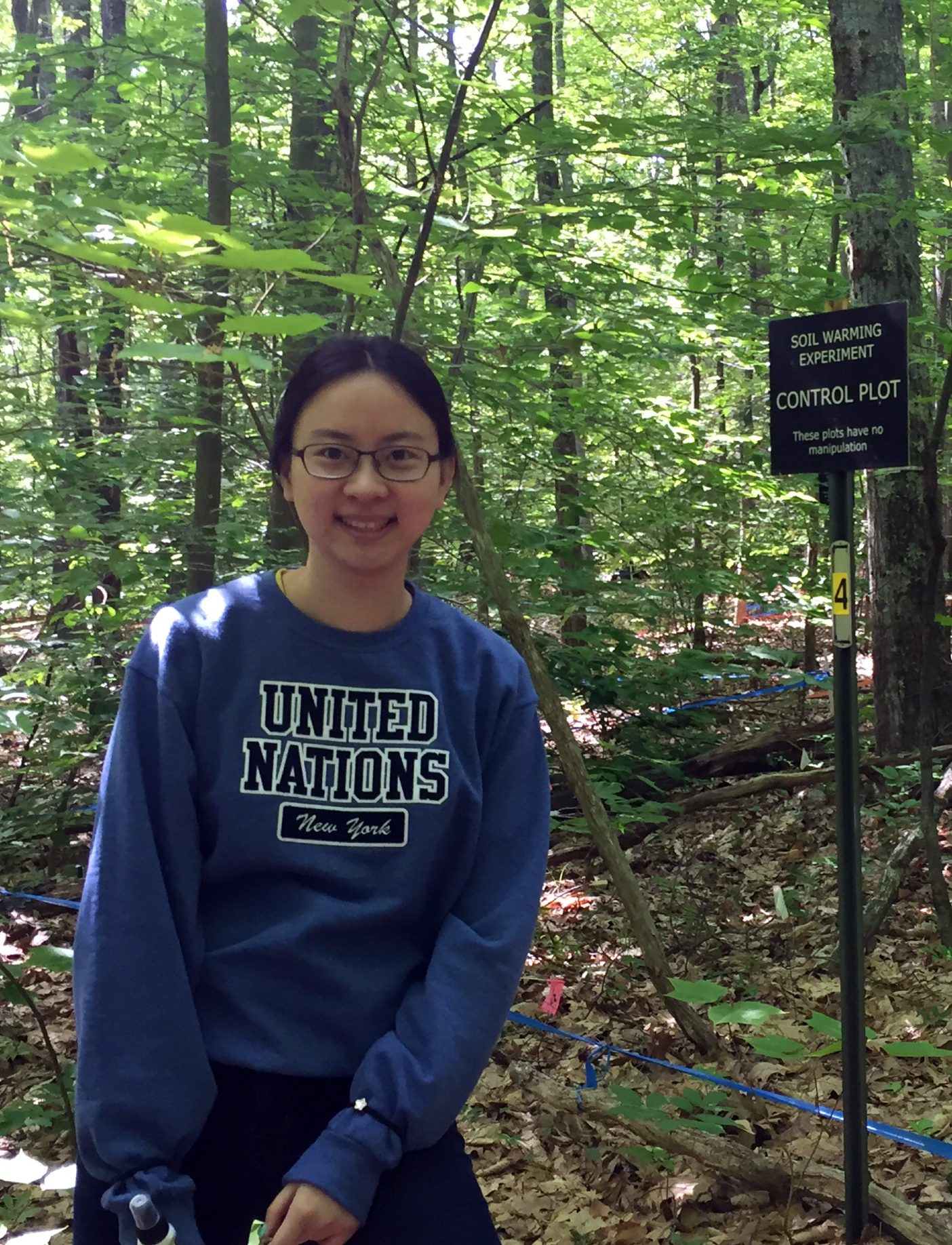
I’m a forest ecologist, focused on forest adaptation under climate change. My work? Assessing impacts, creating adaptive strategies, and using niche modeling to predict changes. Being trained in data science, I apply statistics and machine learning to build interdisciplinary models. The objective is simple - understand the impact of climate change on forest ecosystems and trees, identify conservation priorities, and finding home for forests in the future.
Sarah Smith-Tripp 
Sarah is a proud Oregonian-British Columbia transplant. She spent her undergrad studying geosciences on the east coast at Wellesley College near Boston. Her research passions have taken her all around the world – Lake Baikal in Russia, Mongolia, and even two months sailing a tall ship across the South Pacific. Upon graduating undergrad, she couldn’t wait to move back west to complete an MSc in Geography at UBC (May 2021). Her research allows her to do one of her favorite things – tromp around burned forests.
Tommaso Trotto 
Tommaso was born in the countryside of Venice, Italy, where he once dreamed to become a forester in the Alps. Yet, he had always had the aspiration to move abroad and discover the wild and remote forests of Canada. Soon after, Tommaso made it to Vancouver and completed a double-degree Master’s program in Forestry (TRANSFOR-M) between the University of Padova, Italy, and UBC. During that time, Tommaso was so much surprised by the versatility, technicality, and integration of remote sensing into forestry that later it would have accompanied him during his PhD at UBC. Since 2022, Tommaso has joined the IRSS as a PhD student where he is discovering how lidar can detect and map fine temporal changes in the forest structure to make it resilient to small-scale disturbances, such as small fires and insect attacks.